Studio example
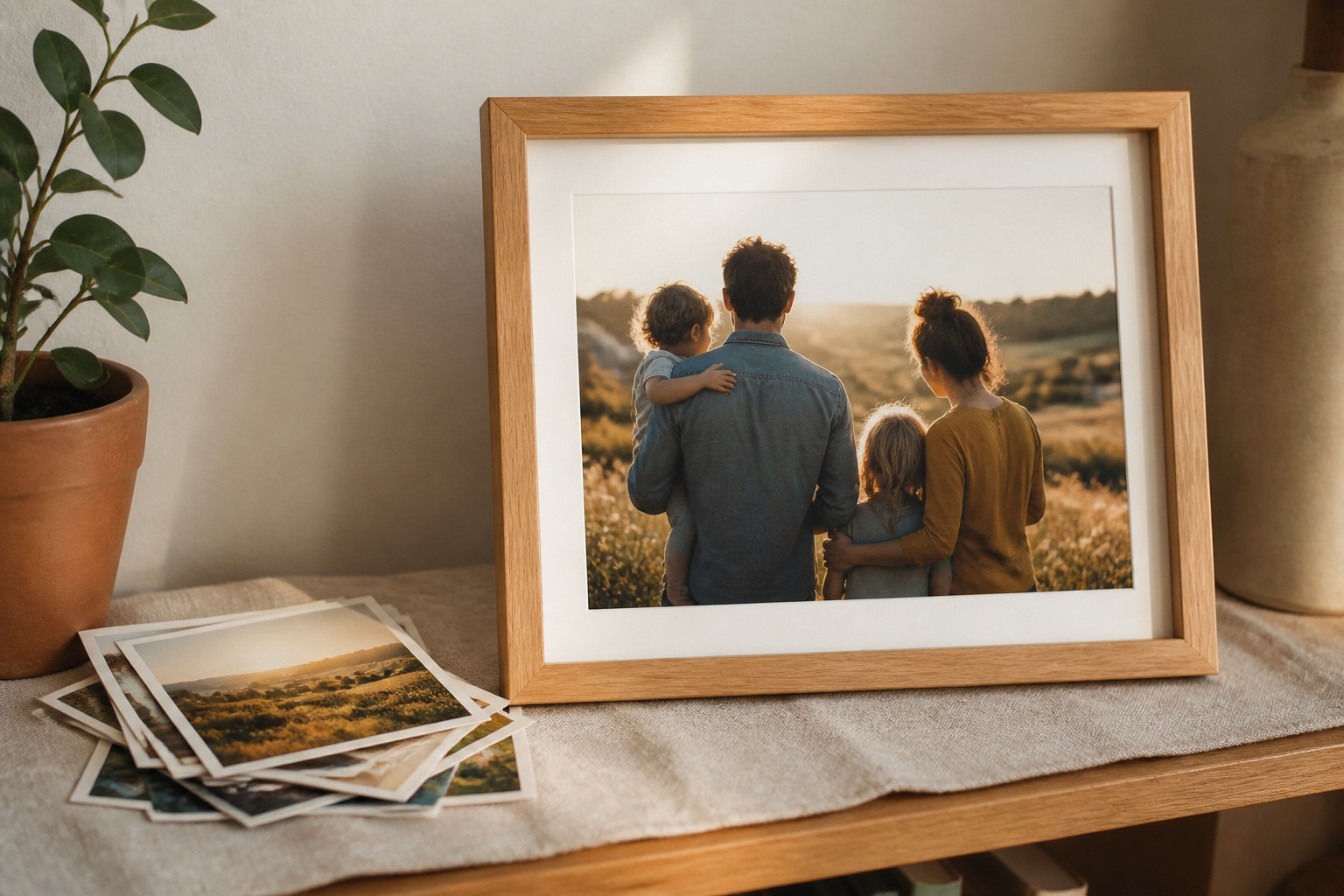
Warm oak for a family photograph
A warm wood profile gives a favorite family photograph a quieter, more lived-in presence.
Shared by Studio example
The Framing Community
Ask a real framing question, learn from studio examples, or share the choices behind a piece you love. Every public submission is reviewed before it appears.
Questions about size, mats, glazing, paper or gallery walls are welcome. We will reply by email and may publish an edited answer if you say yes.
Tell the community what you framed and why. Use a public HTTPS image URL; we will check the story, image and permissions before publishing.
The wall gallery
Studio example
A warm wood profile gives a favorite family photograph a quieter, more lived-in presence.
Shared by Studio example

Studio example
A slim dark profile lets a graphic art print carry the contrast while the frame keeps the silhouette precise.
Shared by Studio example
Ask a Framer knowledge base
Use a mat when the image benefits from breathing room, when you want to emphasize a border, or when the finished frame needs more presence. A full-bleed print can feel cleaner for graphic work and photographs that already have a strong edge.
Shatter-resistant acrylic is lighter and safer to ship, which makes it a practical choice for larger pieces and busy rooms. Glass can feel optically familiar but adds weight and needs more careful handling.
Start with roughly 2–4 inches between outside edges. Keep the gap consistent enough to create a rhythm, then adjust for the furniture, frame scale and viewing distance.
Check the effective resolution at the intended print size, then inspect the file at 100% for focus and compression. A lower DPI can still work when the piece is viewed from farther away; the Frame Fit Checker gives you a planning estimate.