Poster framing guide
How to Frame a Poster Without Making It Look Cheap
A poster can look like a finished piece of art when the frame gives its typography, image and negative space enough room to breathe. Start with the poster’s paper size, then choose a profile that supports the design.
01
Measure the poster before buying a frame
Measure the paper edge to edge and note whether the poster has a printed border. Do not choose a frame from the advertised poster title alone; the actual dimensions can vary by printer and edition.
If the poster is rolled, flatten it gradually under clean, even weight before framing. A wavy sheet makes even a good frame look unfinished and can create shadows beneath the glazing.
02
Choose a mat when the design needs distance
A narrow mat can give a small poster more authority and keep strong color away from the moulding. For a full-bleed design with a deliberate edge, frameless presentation may be cleaner.
Avoid a mat that covers the poster’s title, signature or border. Preview the opening at the final size so the frame supports the composition rather than hiding it.
03
Use the frame to quiet the room
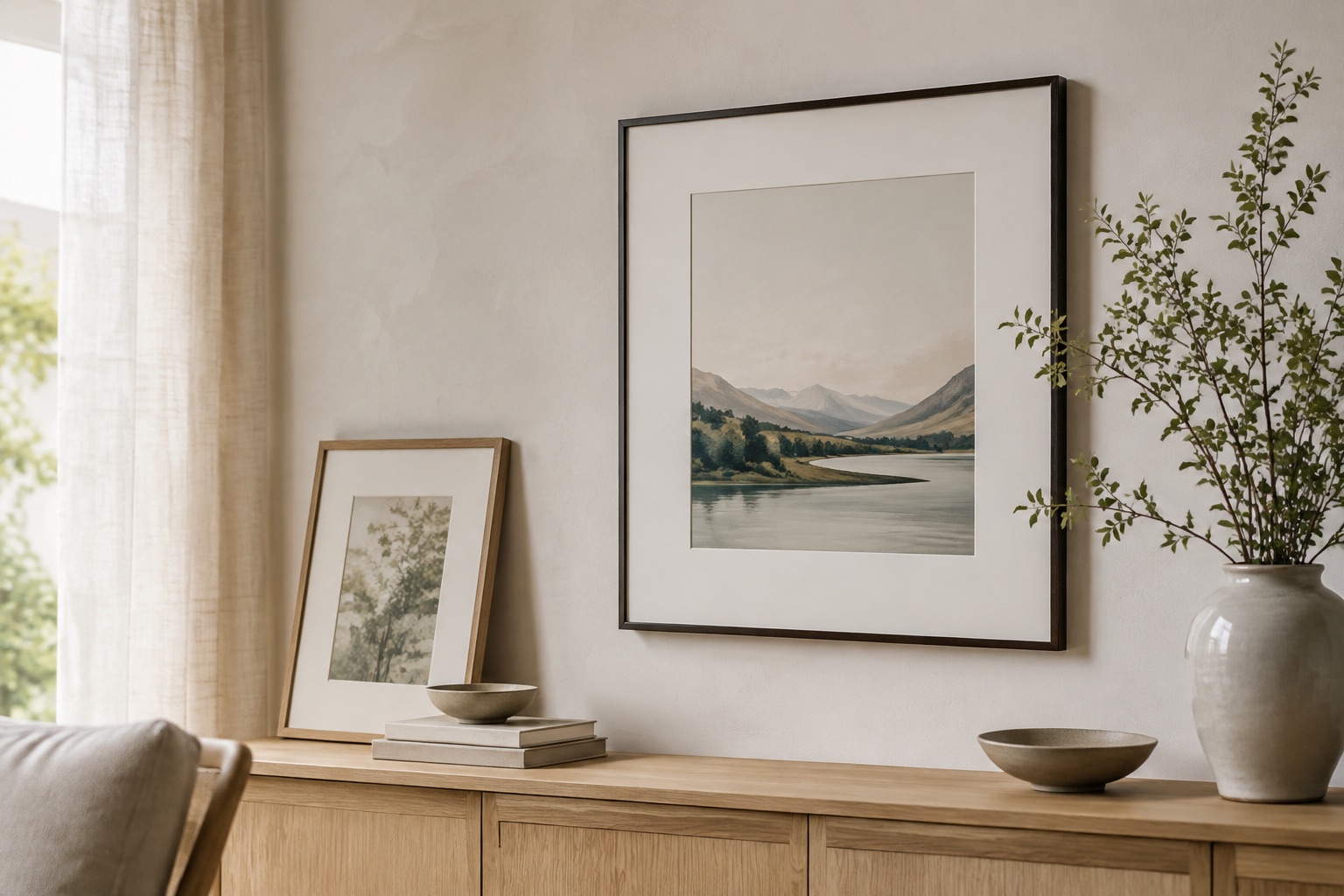
Matte black is a reliable partner for typography, movie posters and graphic work. Natural oak softens colorful illustrations and travel posters. Keep the profile simple when the poster already has a lot happening at the edge.
A protective acrylic cover is practical for larger posters and safer in busy rooms. Hang the finished piece away from direct sun and strong heat to protect the paper and color.
See it before you order
Put the advice into a real frame.
Upload your picture, compare frame profiles and mats, and check the finished proportions before you commit.
Open the frame builderCommon questions
Should a poster be framed with a mat?
It depends on the design. A mat adds breathing room to a small or detailed poster, while a full-bleed graphic often looks best with a simple frame and no mat.
How do I keep a poster flat in a frame?
Use a rigid, acid-free backing and a properly sized frame. Avoid forcing a curled poster into place; flatten it first and use professional mounting when the paper is valuable.