Frame planning guide
Portrait or Landscape? How to Choose Frame Orientation
Frame orientation should follow the image and the wall around it. A portrait frame gives a person or tall subject room to breathe, while a landscape frame can echo furniture and architectural lines.
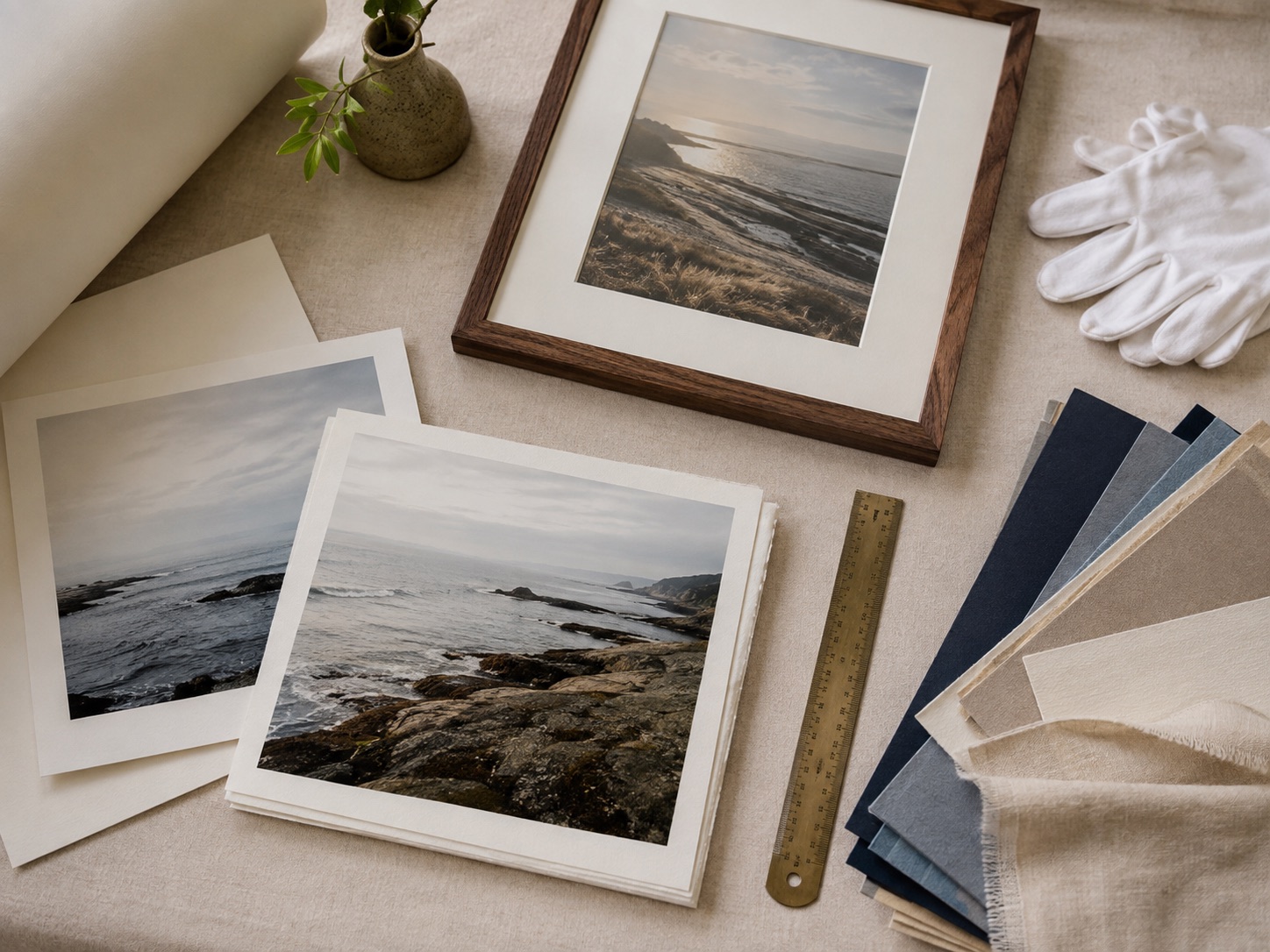
01
Let the composition lead
Portrait orientation usually suits people, buildings, trees and vertical illustrations. Landscape orientation supports groups, horizons, rooms and wide scenes. Rotating an image simply to fit a wall can make the composition feel cramped.
Before printing, check where the subject looks or moves. Leave visual space in front of a face, vehicle or figure rather than placing the subject against the frame edge.
02
Use the room as a second guide
A portrait piece can fill the space beside a doorway or sit neatly above a narrow table. A landscape piece often works over a sofa, dresser or long console because its width relates to the furniture.
If you are building a group, mix orientations only when the outside spacing stays intentional. Similar frame profiles and mat colors can make different ratios feel like one collection.
03
Preview both before you commit
A live preview makes the orientation decision more concrete. Compare the crop, visible opening and outside frame size, then tape the outline on the wall so the final piece is judged in the room rather than only on a screen.
See it before you order
Put the advice into a real frame.
Upload your picture, compare frame profiles and mats, and check the finished proportions before you commit.
Open the frame builderCommon questions
Should a portrait photo always use a portrait frame?
Usually, but not always. A portrait photo can sit inside a landscape frame with a generous mat if the room or gallery wall calls for that proportion.
Can I turn a landscape photo into a portrait print?
Only if the crop preserves the subject. Check the composition carefully before rotating or trimming the image to a different orientation.