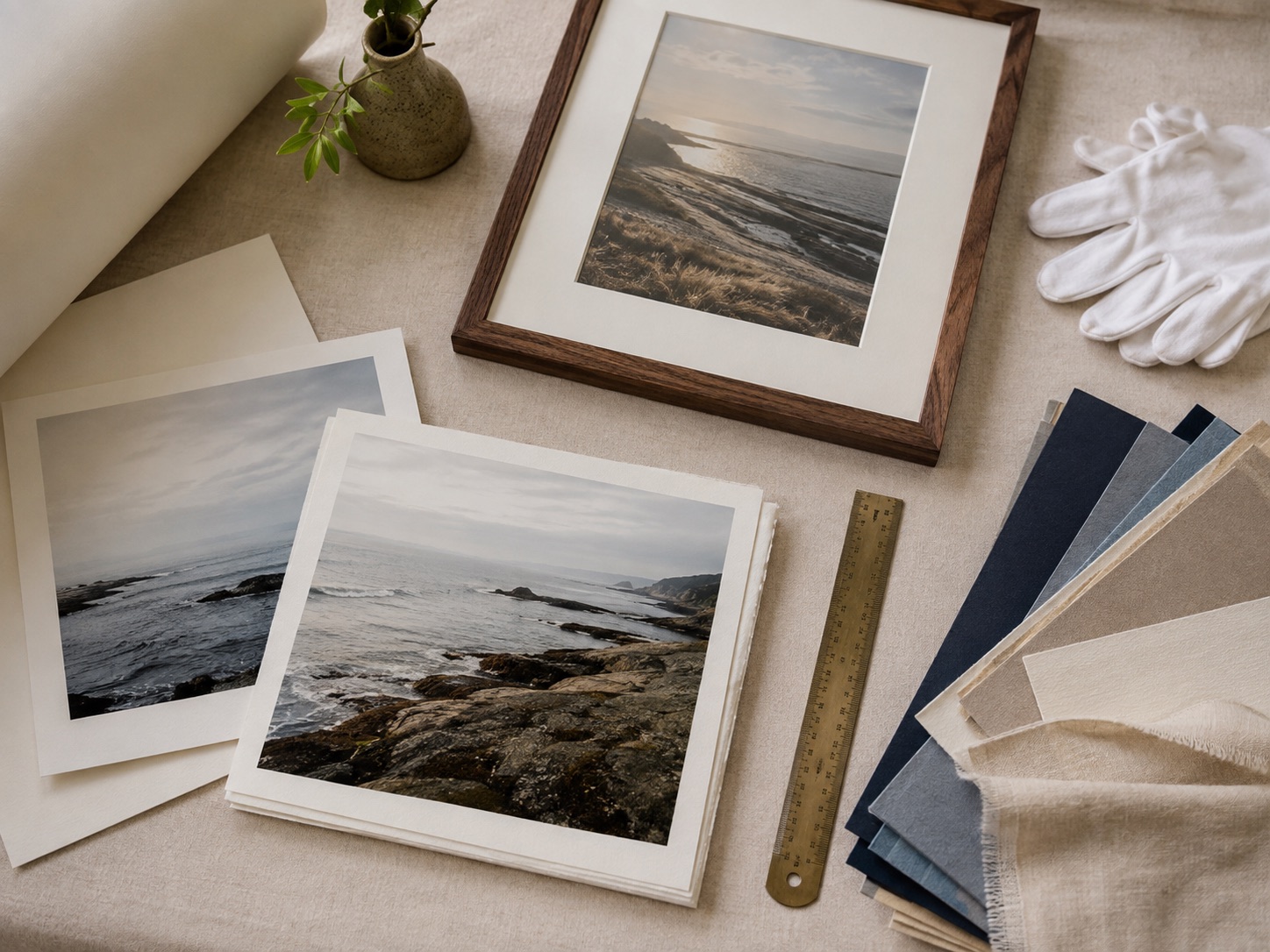
Art print guide
How to Frame an Art Print So It Looks Finished
The best frame makes an art print feel intentional without competing with it. Start with the paper and the room, then use the mat and moulding to create the amount of breathing room the image needs.
01
Start with the actual print size
Measure the paper edge to edge, not only the printed area. If the artwork has a white border, decide whether you want that border visible; it changes the opening the frame needs to show.
If you are printing from a digital file, choose the finished size before choosing the frame. The size page shows the outside dimensions, available mouldings and the resolution target for each format.
- Keep the paper size separate from the finished outside frame size.
- Check the crop before you commit to a portrait, landscape or square format.
- Use the largest original file available rather than a screenshot or compressed message attachment.
02
Decide whether the print needs a mat
A mat gives the artwork a quiet border and keeps the paper away from the glazing. It is especially useful for smaller prints, detailed illustrations and work that needs a little more presence on a larger wall.
A full-bleed poster or a deliberately edge-to-edge design may look better without one. The right choice is the one that supports the composition rather than adding a frame decision the artwork does not need.
03
Match the moulding to the work and room
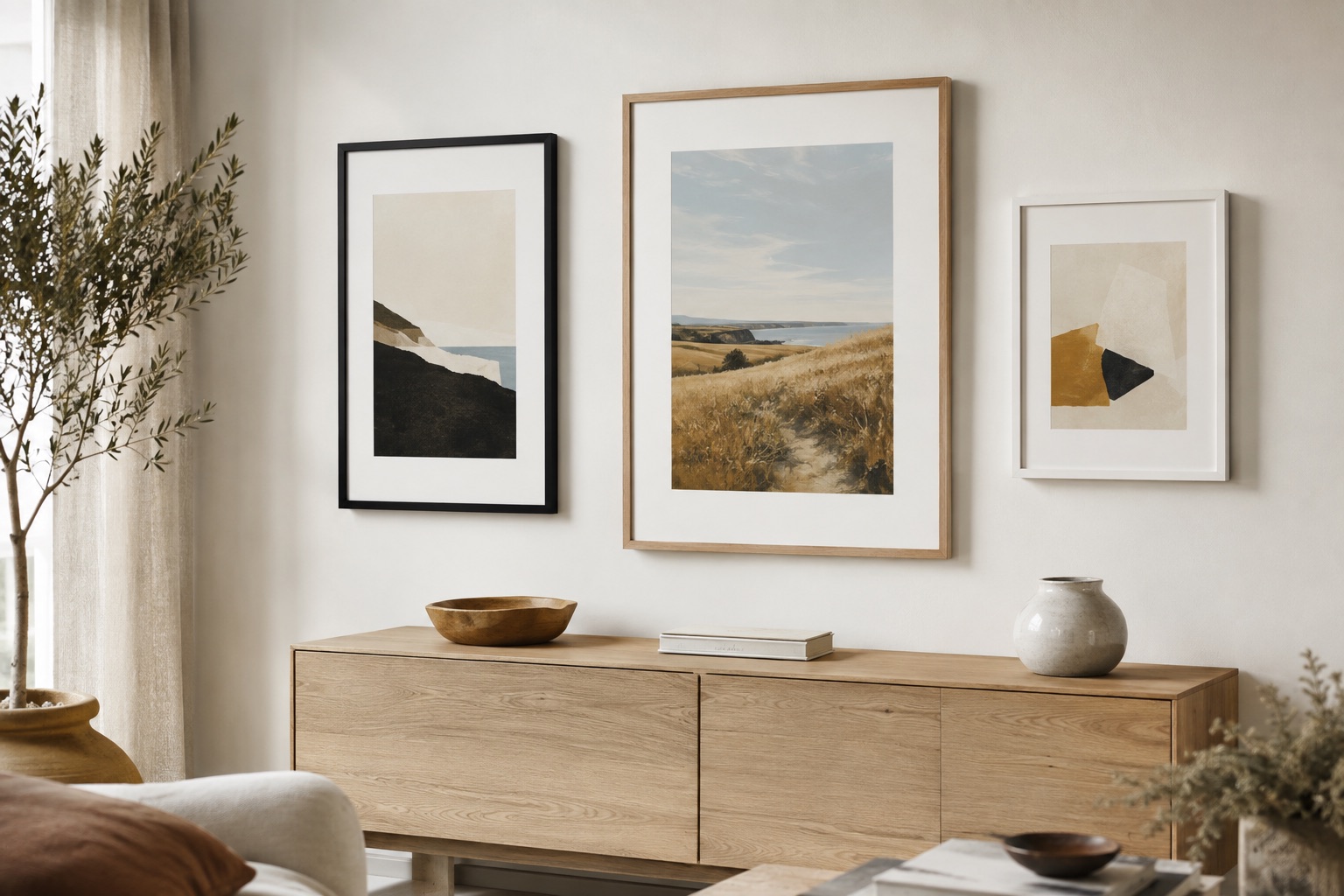
Matte black gives graphic work, typography and monochrome photography a crisp edge. Natural oak brings warmth to landscapes, botanicals and family photographs. A deeper box profile gives contemporary work a little more separation from the wall.
When in doubt, choose the frame that echoes one quiet element in the room—wood, metal, a dark line or a pale wall—without matching every piece of furniture.
04
Check the wall before ordering
Tape the intended outside dimensions on the wall or mark them on the floor. View the outline from the doorway and from the place where you will usually sit. This catches the most common mistake: choosing a frame that works on the screen but feels too small in the room.
Our frame builder lets you preview the image in the moulding and mat before ordering, then the specifications page gives you the materials and turnaround details in one place.
See it before you order
Put the advice into a real frame.
Upload your picture, compare frame profiles and mats, and check the finished proportions before you commit.
Open the frame builderCommon questions
Should an art print be framed with a mat?
Often, yes. A mat adds breathing room and separates the print from the glazing, but full-bleed posters and edge-to-edge designs can look cleaner without one.
What is the safest glazing for an art print?
Shatter-resistant acrylic is light and practical for most rooms. For a piece that hangs in strong direct light, consider the room’s exposure and ask about the glazing options available for that order.